
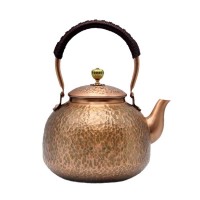


Cast iron teapot: The Great Holiday Gift For Every Occasion

Cast iron teapot: The Great Holiday Gift For Every Occasion
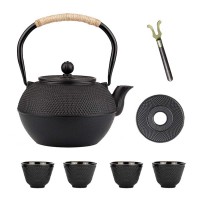
Cast iron cookware is all the rage these days, but what about Chinese cast iron teapot? In fact, using cast iron utensils in the tea making process is a long standing tradition! Although this practice has been around in China for hundreds of years, in recent years, Western tea lovers have also begun to choose cast iron teapots when tasting tea. If you want to enhance your Sencha or Genmai Cha drinking experience, consider adding a cast iron teapot to your teaware collection.
Cast Iron Teapots vs. Japanese Tetsubin
Let's start by solving an obvious problem. When shopping for cast iron teapot, you will undoubtedly often see the term "Tetsubin" appearing at the same time as "cast iron teapot". Although both terms refer to a teapot shaped teaware made of iron, there are actually some differences between the "cast iron teapot" common in professional tea shops and the traditional "Tetsubin".
"Tetsubin"(literally "iron kettle") is a kettle specially used for boiling water and making tea. Traditionally, they are usually hung above a charcoal fire for heating; they are sometimes used with a bowl-shaped charcoal stove (called a "binake"). The outer wall of Tetsubins is usually engraved with exquisite patterns, but some styles are designed more simply. Although the Tetsubin resembles a teapot in shape, its only use is to boil water, and the actual tea making process is carried out in a separate container.
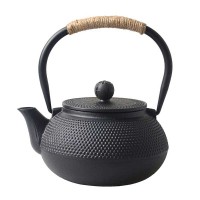
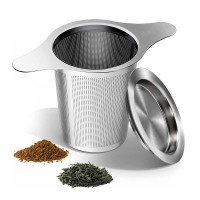
Modern cast iron teapots are designed to mimic traditional Tetsubins: they are also made of iron, often engraved with patterns on the outer walls, and are closely related to tea-making activities. However, the similarities between the two stop there. Cast iron teapots are specially designed to make tea, not to boil water; for this reason, these teapots often come with a removable filter (liner).
Cast iron teapot is not suitable for direct use in boiling water. The main reason is that the inner walls of such teapots are usually coated with a layer of enamel glaze. Although the enamel coating can effectively prevent the teapot from rusting, the enamel layer will easily crack if it is directly exposed to high temperatures during the boiling water process. Therefore, although people often collectively refer to modern cast iron teapots as "iron bottles", the two are not the same type of utensils in essence.
Why Choose A Cast Iron Teapot?
From a practical point of view, the biggest reason for choosing cast iron teapot is its excellent thermal insulation performance. Unlike teapots made of glass or ceramic, cast iron teapots can stay hot for longer than teapots made of other materials. Of course, if you want to brew delicate tea products that are sensitive to water temperature, you may need to pay a little attention when using a cast iron pot; but if you like to sip a few cups of tea leisurely during your leisure nap, the cast iron teapot will undoubtedly allow your tea soup to maintain the right temperature for a longer period of time.
From an aesthetic point of view, the cast iron teapot has a pleasing appearance and can add a traditional and rustic charm to your tea tasting experience. This type of teapot has a variety of styles and colors. You can find designs that reflect nature.
Tips For Making Tea With Cast Iron Teapot
Using a cast iron teapot to make tea is not much different from using a ceramic or glass teapot, but there are a few tips worth noting if you want to get the best tea tasting experience.
Please preheat the cast iron teapot before use. Preheating the teapot before making tea helps keep the teapot hot throughout the tea making process. When you are ready to boil water for tea, add more water to the kettle. After the water temperature reaches the appropriate temperature, pour part of the hot water into the vacant teapot (no filter, tea leaves or anything else is placed in the teapot at this time), and turn the teapot to allow the hot water to fully contact the inner wall of the teapot body. After the teapot has been preheated (usually only a moment, which is not a process that requires precise measurement), the hot water can be poured away. Afterwards, you can make tea in the teapot as usual.
Please pay attention to the water temperature requirements of the tea leaves you brew. As mentioned earlier, some tea leaves are sensitive to excessive water temperatures. In view of the excellent heat storage properties of cast iron materials, it is particularly important to accurately control the water temperature when using cast iron teapot to make tea. If this is the first time you are trying to brew a certain type of tea in a cast iron teapot, it is recommended to start with a lower water temperature and then adjust it in subsequent brewing based on actual conditions.
How To Maintain Cast Iron Teapot
When maintaining cast iron teapot, there are a few precautions that need to be kept in mind. Although the inner walls of cast iron teapots are usually glazed, rust remains a concern for those teapots whose outer sides are not glazed. To prevent problems before they occur, follow the following suggestions:
Be sure to clean the teapot immediately after use. Never allow water to stay in the teapot for a long time after making tea.
Be sure to wash the teapot by hand and never put it in the dishwasher. I know that dishwashers do bring great convenience, but if you want this cast iron teapot to accompany you through the long years, please stick to washing it by hand. When cleaning cast iron teapot, use strong detergents with caution. If conditions permit, only rinse with hot water.
Author's note: When I first bought this cast iron teapot, I used a little mild detergent to clean it like other tea sets. As long as you do not abuse detergent, it usually will not cause damage to the teapot.
After cleaning, please dry the teapot immediately. Given that moisture is one of the main causes of rust, drying the teapot after cleaning it can help prevent rust. Please use a towel to wipe off as much water as possible, then invert the teapot and allow it to naturally dry the remaining water.
If your teapot accidentally rusts (this happens from time to time, don't worry too much), just use a soft brush or toothbrush to remove the rust.
See More Article About How To Care A Cast Iron Teapot
Shop Online For Teaeer Cast Iron Teapot With Infuser For Loose Tea 600ml/20oz
See All Teaeer Cast Iron Teapots
Leave a Comment